Winter pool maintenance does not have to be complicated. The biggest mistake many South African homeowners make is thinking the pool can be ignored until spring. The water may be colder and the pool may be used less often, but leaves, dust, algae, and chemical changes can still cause problems.
The best approach to winter pool maintenance is simple: keep the pool lightly maintained instead of letting problems build up. This means removing debris, checking the water, running cleaning equipment, and keeping the system in good working condition. Done consistently, this saves time, protects your pool surfaces, and makes reopening the pool much easier when warmer weather returns.
For homeowners who want to reduce manual cleaning, Right Air offers a range of pool cleaners that can help keep winter pool maintenance manageable.
Why winter pool maintenance is still necessary
Even when no one is swimming, the pool remains exposed to the outdoors. Wind can blow in leaves, dust, seeds, insects, and garden debris. Rain can affect water balance. Reduced brushing can allow algae to form on steps, corners, and shaded areas.
The CDC’s home pool and hot tub water treatment and testing guidance explains that pool owners should regularly check disinfectant and pH levels. That remains important because water can still become unbalanced when the pool is used less often.
Winter pool maintenance is not about doing everything every day. It is about doing the right tasks often enough to prevent avoidable problems.
What happens when pool maintenance stops?
If a pool is neglected during winter, the problems may not appear immediately. Over time, however, debris sinks, water becomes dull, algae grows, and filters work harder.
Problems caused by poor winter maintenance
| Problem | Cause | Result |
|---|---|---|
| Cloudy water | Poor filtration, debris and unbalanced chemistry | Water looks dull and unsafe |
| Algae patches | Low brushing and poor circulation | Green or black marks on surfaces |
| Dirty pool floor | Leaves, dust and fine debris settle | More vacuuming needed later |
| Waterline stains | Oils, dust and floating debris collect | Harder scrubbing in spring |
| Blocked baskets | Leaves and insects collect in the system | Reduced circulation |
| Filter pressure issues | Too much debris reaches the filter | Extra cleaning or servicing needed |
A small weekly routine is far easier than fixing all of this at once.
A simple winter pool maintenance routine
A clear routine helps homeowners stay consistent.
Weekly maintenance checklist
- Remove leaves and floating debris.
- Empty the skimmer and pump baskets.
- Check the water level.
- Test chlorine and pH.
- Run the pool cleaner.
- Brush steps, corners and shaded areas.
- Inspect the filter pressure.
- Check for algae or staining.
- Cover the pool where practical.
- Store loose accessories safely.
This routine keeps winter pool maintenance simple and manageable. It also reduces the amount of cleaning required before summer.
Use the right cleaner for your pool type
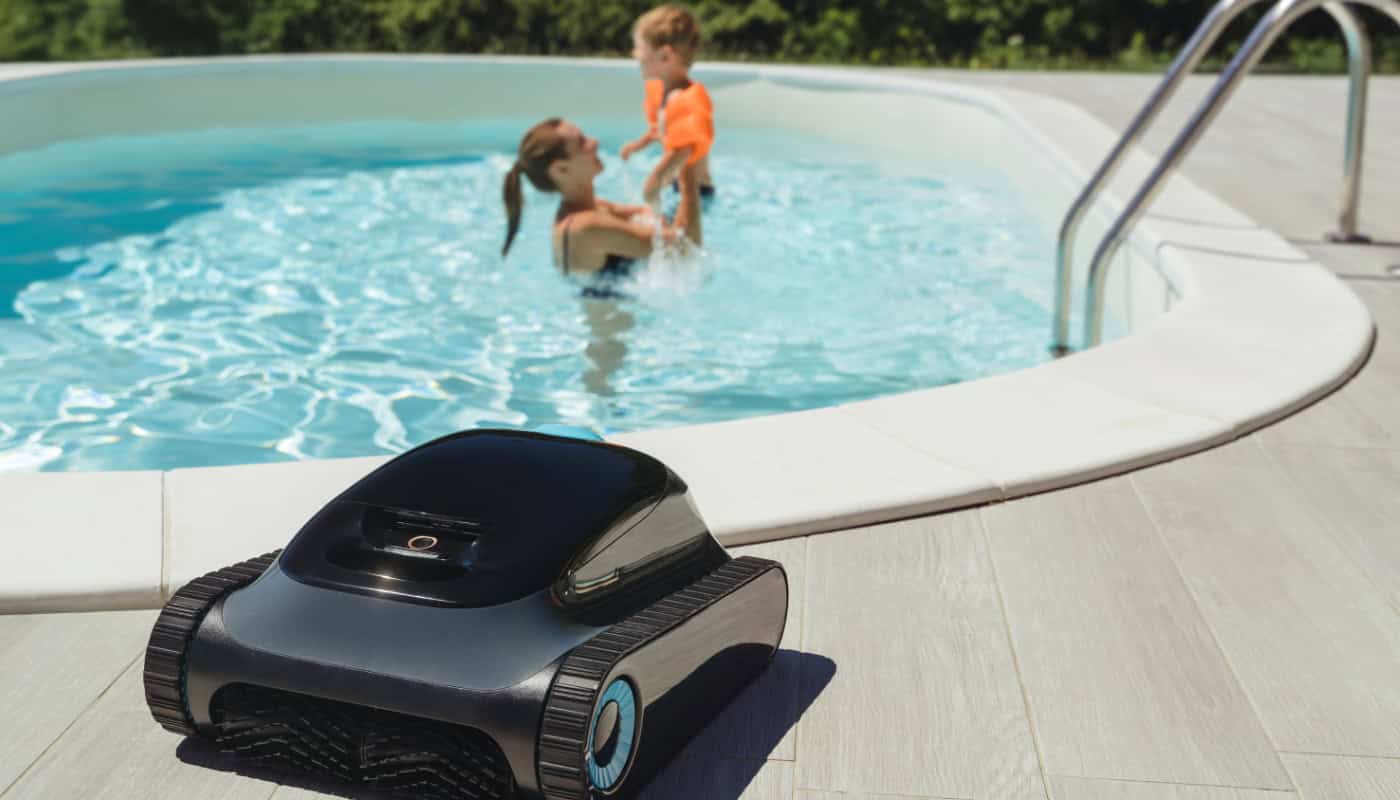
A robotic pool cleaner is one of the easiest ways to reduce the hassle of winter maintenance. It does not replace water testing or chemical care, but it can significantly reduce the manual work involved in removing dirt and debris.
For pools that need stronger debris handling and filtration, the Wybot C2 Smart Cordless Dual Layer Filtration Pool Cleaner is a relevant choice. It is designed for cordless cleaning with dual filtration, making it useful for pool owners who want more efficient debris collection.
For homeowners looking for a more advanced robotic option, the Wybot S2 Vision Smart Cordless Robotic Pool Cleaner is suited to smarter cordless cleaning where coverage, convenience, and reduced manual effort matter.
Floor, wall and surface cleaning: what matters most?
Different areas of the pool collect different types of dirt. Winter pool maintenance becomes easier when you understand which cleaning method suits each area.
Pool area cleaning guide
| Pool area | Typical winter issue | Best cleaning approach |
|---|---|---|
| Surface | Floating leaves, insects and pollen | Skim regularly or use a surface cleaner |
| Floor | Fine dust and settled debris | Use a robotic cleaner |
| Walls | Algae and marks in shaded areas | Brush or use wall-capable cleaner |
| Waterline | Dirt rings and oils | Brush regularly |
| Steps | Debris pockets and algae | Brush and vacuum |
| Corners | Settled dirt | Direct brushing or smart cleaner coverage |
For pools where surface debris is a recurring issue, the Wybot S2 Solar Vision Smart Cordless Robotic Pool Cleaner may be useful for homeowners wanting advanced cordless cleaning support with smart features.
How often should you clean the pool in winter?
The answer depends on the pool environment. Pools near trees, dusty roads, open gardens, or windy areas need more attention. Pools with covers may need less cleaning, but they should still be checked.
Suggested winter schedule
| Task | Low-debris pool | High-debris pool |
|---|---|---|
| Remove leaves | Weekly | 2–3 times per week |
| Empty baskets | Weekly | 2–3 times per week |
| Test water | Weekly | Weekly |
| Run robotic cleaner | Weekly | 1–3 times per week |
| Brush walls and steps | Every 2 weeks | Weekly |
| Check filter pressure | Weekly | Weekly |
| Inspect for algae | Weekly | Weekly |
This schedule can be adjusted, but the principle stays the same: do small tasks regularly.
Pool chemistry: do not ignore the basics
A clean-looking pool can still have unbalanced water. That is why testing remains important in winter. Rain, leaves, organic material, and low circulation can affect chlorine and pH levels.
The CDC’s pool chemical safety guidance provides important reminders about safe handling, storage, and use of pool chemicals. Homeowners should always follow the chemical product instructions and avoid mixing different pool chemicals.
Basic winter checks should include:
- Chlorine level
- pH level
- Water clarity
- Algae growth
- Filter pressure
- Debris levels
- Baskets and skimmer condition
If the water is balanced and debris is controlled, winter pool maintenance becomes far easier.
How to reduce manual work
The aim is not to spend your winter weekends cleaning the pool. The aim is to set up a low-effort system that prevents major problems.
Low-hassle maintenance tips
- Use a pool cover when possible.
- Clean leaves before they sink.
- Run the cleaner before the pool looks dirty.
- Keep baskets clear.
- Test water on the same day each week.
- Brush shaded areas where algae forms.
- Store pool equipment neatly.
- Clean filters before pressure rises too much.
- Trim trees and plants near the pool.
- Keep pool chemicals stored safely.
Small habits prevent large problems.
Mistakes that make winter pool maintenance harder
Homeowners often create extra work by leaving small issues too long.
Mistake 1: Waiting until spring
If you wait until warm weather returns, the pool may need intensive cleaning, chemical correction, and filter attention.
Mistake 2: Only cleaning the surface
A pool may look fine on top while dirt builds up on the floor and steps.
Mistake 3: Not brushing walls
Robotic cleaners can help, but brushing remains important in areas where algae starts forming.
Mistake 4: Ignoring baskets
Blocked baskets reduce circulation and can place extra strain on the system.
Mistake 5: Forgetting water testing
Winter pool maintenance still requires chemical checks. Clear water does not always mean balanced water.
When to choose a more advanced robotic cleaner
A basic cleaner may be enough for a small, simple pool. A more advanced robotic pool cleaner becomes useful when the pool is larger, has more debris, includes steps or complex shapes, or needs better coverage.
Consider a more advanced cleaner if:
- Your pool collects leaves often.
- You have trees close to the pool.
- You struggle with floor dirt after windy weather.
- Your pool has walls and waterline marks.
- You want less manual vacuuming.
- You want a smarter cordless option.
- You prefer a low-hassle weekly cleaning routine.
The right pool cleaner should match the pool, not just the price.
Final thoughts
Winter pool maintenance is much easier when you keep the routine simple. You do not need to spend hours every week cleaning the pool, but you should avoid letting debris, algae, and water imbalance build up for months.
For South African homeowners, the most practical approach is to combine regular water checks, basket cleaning, brushing, and robotic cleaning. This keeps the pool healthier, protects the surface, and makes spring preparation far easier.
A cordless robotic pool cleaner can remove much of the manual effort from winter pool maintenance. Products such as the Wybot C2, Wybot S2 Vision, and Wybot S2 Solar Vision give homeowners practical options depending on pool size, debris levels, and desired automation.
The key is consistency. A little winter care now prevents a major pool clean-up later.